



Unlocking the Earliest Stage of Alzheimer's Disease
Detection of the initiating and mechanistic factors of Alzheimer's disease are critical for early diagnosis, effective disease management and therapeutic discovery. Today, the biomarkers we rely on for early detection and therapeutic intervention do not intiate or predict disease progression.
AlzheimerGuard™ is a proprietary blood-based biomarker designed to detect Alzheimer’s disease years before clinical symptoms appear. The test detects hiT Cells™, a specific population of aberrant immune T cells in the blood stream that are the first biomarker associated with the mechanism of disease initiation and progression. Monitoring hiT Cells through a simple blood test could allow clinicians and researchers to detect disease-related biological changes long before cognitive symptoms become apparent, providing a preclinical window of 13 to 20 years for intervention.
AlzheimerGuard has huge potential to add earlier disease detection and prognostic capabilities to existing biomarker panels, enabling early intervention and the development of a new class of mechanism-based therapeutics.

AlzheimerGuard detects an early disease signal associated with the initiation
and progression of Alzheimer’s pathology
Based on Paradigm-Shifting Research
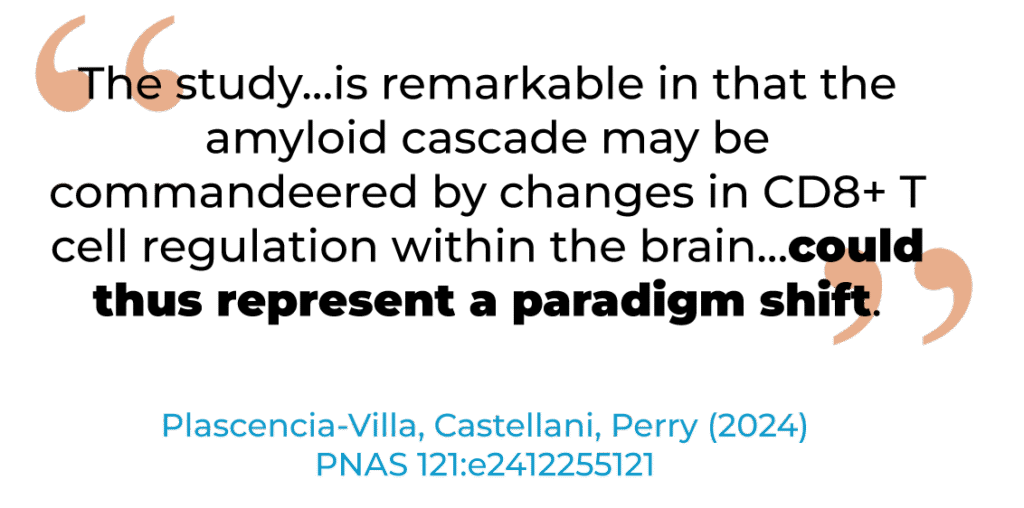
Research led by our Co-Founder and Chief Science Officer, Dr. Christopher Wheeler, showed aged, self-reactive hiT Cells decrease in the blood as disease progresses and are elevated in the brains of Alzheimer’s patients.
As published in Panwar et al., 2024, this research demonstrated that hiT Cells migrate from peripheral blood to the brain in mice, initiating comprehensive Alzheimer's pathology.
This is the first time a biomarker has been shown to initiate Alzheimer's in an animal model and to identify early stages of the disease in humans.
T-Neuro’s hiT Cells™
The Only Biomarker That Causes Alzheimer’s-like Pathology

hiT Cells initiate the full spectrum of Alzheimer’s pathology in normal mice.
This is the first and only factor demonstrated to have this functionality
In Humans hiT Cells Track with Disease
